Showing posts with label 2020 Eyeglass Winter Park eye exam. Show all posts

Tuesday, 26 November 2013

Contact Lenses

Contact Lenses
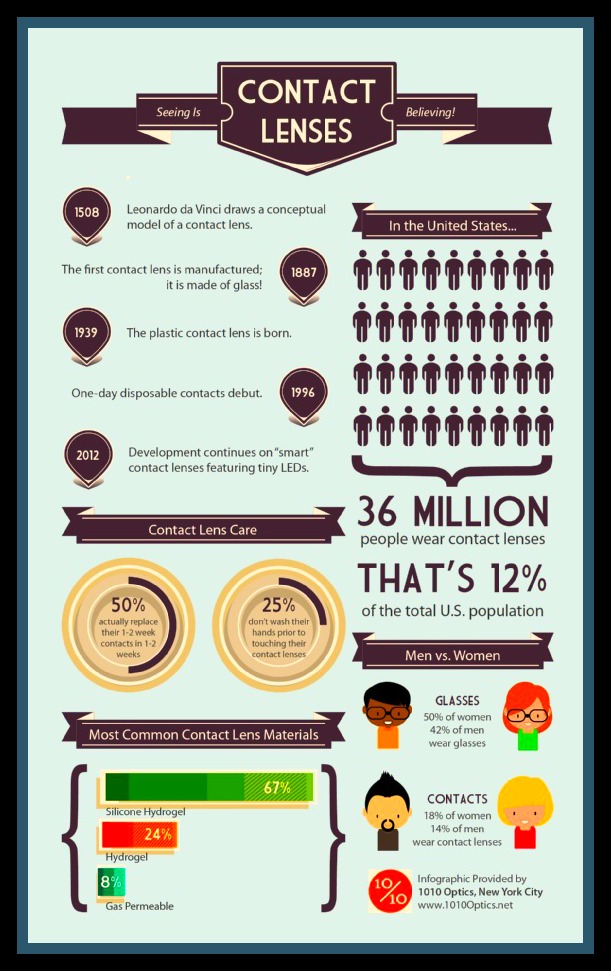
Contact lenses are worn by millions of Orlando residents for a variety of reasons. Some people don’t like the appearance of frames and others want to change the color of their eyes. Contact lenses also provide wearers with more peripheral vision and they don’t accumulate moisture from rain or snow.

If you’re on the fence regarding contact lenses or eyeglasses, it’s important to consider your lifestyle. If you love to play sports, contact lenses might be a good choice. Another option is buying both – contact lenses and eyeglasses. This way you can have the best of both worlds!

Tuesday, 29 October 2013

Surviving Allergy Season

Do you ever step outside, take a deep breath—and begin to sneeze uncontrollably as your eyes start to itch and swell?

You are not alone. Many adults and children suffer from seasonal allergies. Fortunately, there is more help than ever before for seasonal allergy victims.

Allergic conjunctivitis is the most common seasonal allergy that affects the eyes. Its symptoms—itchy, watery, red and swollen eyes—are usually caused by exposure to pollen. Contact lens wearers may experience additional discomfort from the collection of pollen and allergy-related eye secretions that can bind to their lenses.

How do you know if your symptoms are caused by an allergy or by another condition or disease? Both allergies and colds cause symptoms of sneezing, congestion, runny nose, watery eyes, fatigue and headaches. Pay close attention to the following, more subtle signs to learn whether you have a cold or
an allergy:
  • Cold symptoms often appear one at a time. Allergy symptoms occur all at once.
  • Cold symptoms usually last from 7 to 10 days, whereas allergy symptoms continue only as long as a person is exposed to the allergy-causing agent.
  • Allergies generally cause clear, thin, watery mucous discharge. Colds may bring on a yellowish nasal discharge, suggesting an infectious disease.
  • Sneezing is a symptom more common to allergies, especially when it occurs multiple times in a row.
  • If you have a fever, it’s not allergy.
  • Colds are more common during the winter months, whereas allergies are typically triggered in the spring, summer and fall, when plants are pollinating.
  • Pay special attention to your eye symptoms. Generally, if your eyes itch, you have an allergy. If your eyes only burn or sting, you may have dry eye. If there is a thick discharge from your eye, you could have an infection. See your eye care provider for a proper diagnosis and treatment if you are experiencing any eye discomfort.
If you suffer from those unpleasant eye symptoms, you may also experience seasonal allergic rhinitis, commonly known as hay fever. This is your nose’s reaction to the same pollen: sneezing, congestion, postnasal drip, runny nose and itchy throat. In fact, pollen can travel through connecting ducts from the eyes into the nose.
Surviving Allergy SeasonThe Best Treatment: Avoidance
Doctors agree that the best way to control seasonal allergy symptoms is to avoid the pollen that triggers them. That means staying indoors when pollen counts are highest. A good rule of thumb is to try to stay indoors as much as possible on hot, dry, windy days, and on any day between 5 a.m. and 10 a.m.
When you are outdoors, follow these guidelines:
  • Minimize walks in wooded areas or gardens.
  • Wear a mask while you mow the lawn or garden. Keep grass cut low—no more than 2 inches high— to help prevent pollen from reaching high into the wind.
  • Keep hedges in your yard pruned and thin to limit collection of pollen on their branches.
  • Dry your clothes and linens in a dryer instead of hanging them outdoors.
Medical Remedies

If your symptoms are mild, some doctors recommend placing cold compresses directly on your closed eyes for 10 to 20 minutes. If that is not effective, visit your local pharmacy and buy an over-the-counter tear substitute, which can lubricate your eyes and help wash the pollen out.

Your vision is priceless and it is important that you maintain your visual wellness by scheduling a yearly comprehensive eye exam with your optometrist or ophthalmologist. Drop into 20/20 Eyeglass Superstore for all your eye care needs. We have a frame for every face and a price for any budget. We also have Independent Optometrists located on site who will be happy to examine your child’s vision. Walk-in’s are welcome but we ask that you come 15 minutes prior to your desired appointment time.

If over-the-counter medicine is ineffective, or if you are not sure that your symptoms are caused by an allergy, see your eye doctor. There are a number of very effective anti-allergy prescription eye drops today that are commonly prescribed by optometrists and ophthalmologists.

Read the original article published on davisvision.com

Friday, 18 October 2013

Eye Facts vs Myths

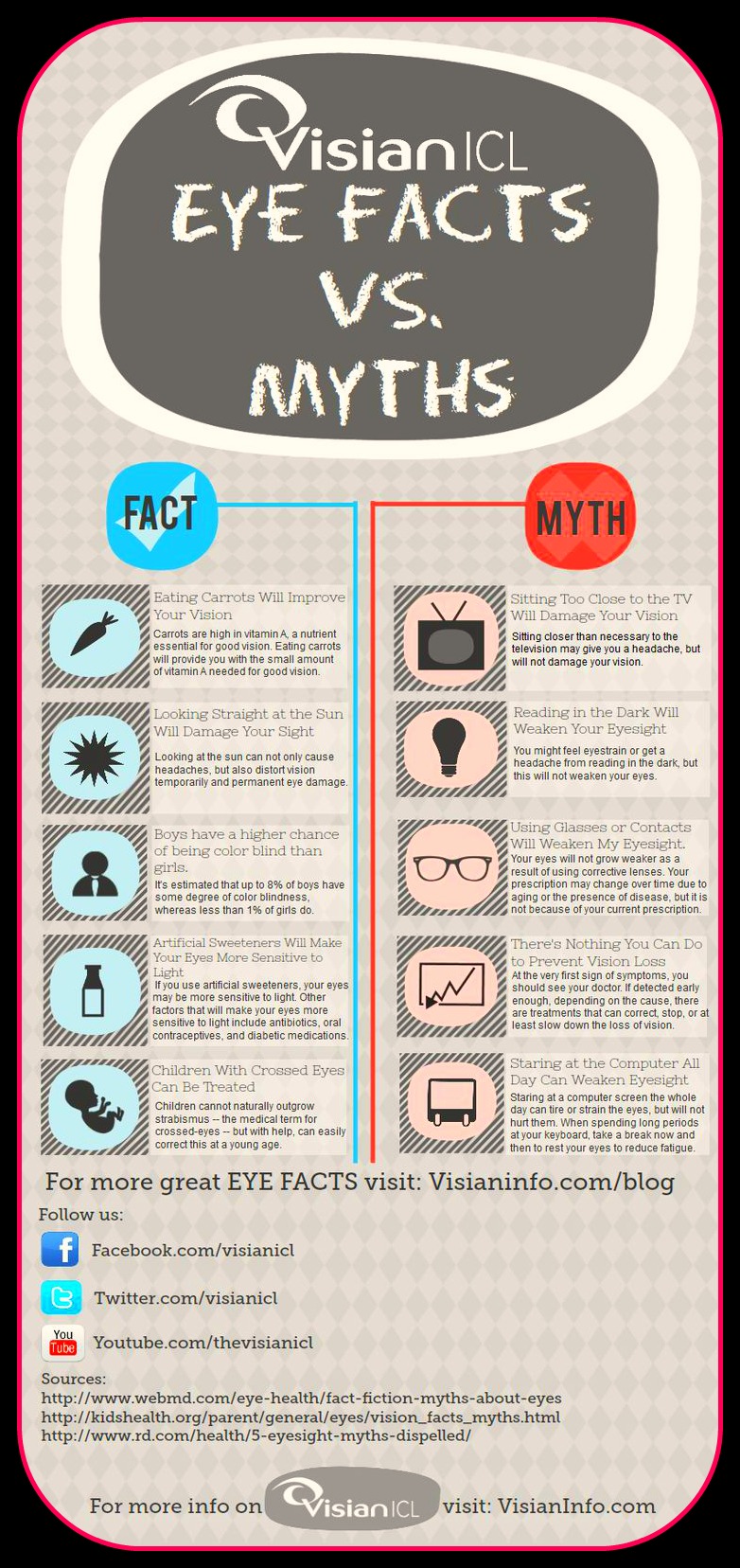
Eye Facts VS Myths
20/20 Eyeglass Superstore is Central Florida’s premier eyecare provider with three locations in Winter Park, Melbourne, and Orange City.  We are proud to feature thousands of frame styles, lenses from the leading manufacturers, and sunglasses from the brands you love and trust.

Drop into 20/20 Eyeglass Superstore for all your eye care needs. We have a frame for every face and a price for any budget.

Tuesday, 15 October 2013

Diabetic Retinopathy: Why You Should Care

Don’t Have Diabetes? Arm Yourself with Information! Simple Steps Can Protect Your Health & Vision.

How Diabetes Affects Eyes
Prevent Blindness America has warn Americans of the potentially blinding effects of diabetic retinopathy. This disease is the leading cause of new blindness cases among adults aged 20-74. Up to 24,000 Americans

are blinded by diabetic retinopathy each year. The American Optometric Association predicts that by 2050, the number of Americans over 40 years old with diabetic retinopathy will triple to 16 million.
2020EyeOct22nd_web
Diabetes is a metabolic disorder in which the body does not produce or properly use insulin, a hormone that allows the body to use blood sugar for energy. It is characterized by high levels of blood sugar, which can cause changes in the blood vessels of the retina, the light-sensitive tissue at the back of the eye that is necessary for good vision.
Testing Is Essential

The only way that diabetic retinopathy can be diagnosed is through a comprehensive eye exam. Diabetics are sometimes first diagnosed in an optometrist’s office when diabetic retinopathy is discovered.

Al learned that he was one of the 40 to 45 percent of diabetics who already have some degree of retinopathy at the time of their diabetes diagnosis.


Who Is at Risk?

All people with diabetes, including those with Type I (juvenile onset) and Type II (adult onset), are at risk of developing diabetic retinopathy. The longer you have diabetes, the more likely you are to develop it. There is a genetic component to this disease, as well. If your grandmother had diabetic retinopathy, for example, your risk is higher.

Diabetic retinopathy can begin without any warning symptoms, which makes a yearly comprehensive eye exam even more critical for diabetics.

Read the original Article published on davisvision.com
Save Your Vision

In order to prevent vision loss, early diagnosis and aggressive treatment of diabetic retinopathy are essential. The risk of blindness can be reduced by 90% with timely treatment and follow- up care. Vision that has already been lost, however, cannot be restored.
Protect Yourself

Prevention is the key to saving sight that might be lost due to late diagnosis.

It is also important to have your blood glucose level tested regularly to determine if you are one of the 54 million people between the ages of 40 and 74 who have pre-diabetes, which would put you at risk for developing Type II diabetes.

If you have diabetes, you can avoid eye problems by controlling your blood sugar and blood pressure levels and by obtaining regular comprehensive eye exams.

Your vision is priceless and it is important that you maintain your visual wellness by scheduling a yearly comprehensive eye exam with your optometrist or ophthalmologist. Drop into 20/20 Eyeglass Superstore for all your child’s eye care needs. We have a frame for every face and a price for any budget. We also have Independent Optometrists located on site who will be happy to examine your child’s vision. Walk-in’s are welcome but we ask that you come 15 minutes prior to your desired appointment time.

Make an appointment At 20/20 Eyeglass Superstore if you have any of the following symptoms:
• Blurry vision
• Difficulty reading
• Sudden loss of vision in one eye
• Seeing rings around lights
• Seeing dark spots or flashing lights


We Look Forward Seeing You!!

Friday, 20 September 2013

Stay Up To Date On Eye Health Information

It’s important to stay up to date on eye health information, especially because some eye conditions like Glaucoma have no symptoms.  As an adult, you might ask yourself, “Why get an eye exam?” Getting an annual eye exam can easily be forgotten, especially with work, family and other obligations.  Make sure you set a reminder in your smartphone or pencil it in to your calendar to get a regular eye exam every year.
 
Stay Up To Date On Eye Health Information
Are you one of the many Americans who skip getting routine eye exams each year? Having a comprehensive eye examination on an annual basis is crucial to maintaining proper eye health and can find eye conditions such as glaucoma.  Routine eye exams also can also detect other underlying conditions.  Your optometrist will perform several tests during your eye exam that test and check your vision.  These tests are completely painless.  Some procedures are a bit uncomfortable but they aren’t hard to deal with.  A proper eye exam will take approximately one hour.
 
If it’s been more than a year since your last eye exam, please feel free to drop in to any 20/20 Eyeglass Superstore location or schedule an exam online. We have over 4000 thousand frames to choose from and we’re known for having a frame for every face and a price for any budget. We also have in-house optometrists that are available for full eye examinations. Check out our coupons page for current offerings as well.

Wednesday, 18 September 2013

Healthy Eyes During Pregnancy

Eyes may change somewhat during pregnancy due to fluid retention, increased blood volume, hormonal fluctuations and other physical shifts that are part of pregnancy. Usually these changes are temporary and resolve after the baby is born, or after weaning a breast-fed child. Vision changes tend to be minor and don’t require a new eyeglass prescription. LASIK surgery should not be done when a woman is pregnant or breastfeeding.

Healthy Eyes During Pregnancy

What to Look For

A condition known as dry eye may result from hormonal fluctuations. Talk to your Eye M.D. about lubricating drops and other treatments that are safe during pregnancy. Wearing contact lenses may be less comfortable when dry eye is present. Eating foods high in omega-3 fatty acids (DHA and EFA), such as salmon, flax seeds and walnuts, may help resolve dry eye and also supports general good health.

If vision becomes very blurry, it may signal high blood pressure or pregnancy-related diabetes. Contact your doctor right away.

Visiting your local optometrist allows doctors to look directly at your blood vessels which can reveal early warning signs of serious health problems such as hypertension, cardiovascular disease and diabetes before the symptoms show up anywhere else in the body.

Schedule an eye exam at 20/20 Eyeglass Superstore? You can schedule an eye exam online here, or call 321-259-3935

About 20/20 EyeGlass Superstore

20/20 Eyeglass Superstore is Central Florida’s premier eyecare provider with three locations in Winter Park, Melbourne, and Orange City.  We are proud to feature thousands of frame styles, lenses from the leading manufacturers, and sunglasses from the brands you love and trust.

Every family owned 20/20 Eyeglass Superstore location features its own independent doctor of optometry as well as an in-house lab to ensure you receive your new customized glasses in as little as one hour.  Our technicians maintain the highest standards of technical skills with the latest in eyecare technology.

To read The original article click here.

Tuesday, 17 September 2013

Get Your Eyes Tested Regularly

Here 2020 Eyeglass superstore provides one of the most complete and thorough eye exams in Orlando/Winter park, Orange city and Melbourne. An eye exam at 2020 Eyeglass superstore will typically take between 30 and 40 minutes.

Seven Steps of an Eye Exam

1. Completing a Health History Form: Completing or updating your health history form, you provide the doctor with an overview of your general health

2. Review of Health History and Pre-Exam Consult: The optician will review your health history with you and discuss any problems you may be having with your vision.

3. Perimetry Test: If the doctor determines it necessary, he or she will perform a threshold perimetry or visual field test to check for blind spots in your peripheral vision.

4. Cover Test: A cover test is a simple procedure for determine how your eyes are working together.

5. Refraction Test: This is the test that most people associate with an eye exam. Using a computerized phoropter.

6. Binocular Slit-Lamp Examination: The slit lamp used in conjunction with a biomicrosocpe allows the doctor to examine the health of your eyes.

7. Dilation Procedure: Your pupils are dilated to allow the doctor to get a better view of the structures inside the eye when an abnormality is suspected.
Get Your Eyes Tested RegularlyDepending on your health and age, you should also visit the optometrist to make sure you are above driving standards. Sometimes people won’t even realize they have blurred vision as deterioration tends to happen quite slowly over time.

A visit to the optometrist can also let you know if you have a lazy eye. This is especially important for children, so if you are a parent or guardian, make sure you take your kids in for regular eye exams. Check out our post on Top 5 Tips on Choosing Children’s Eyeglasses for more information on bring your kids to the optometrist.

Certain eye diseases such as Glaucoma show no symptoms and most people are unaware of it until it’s too late. Regular visits to your optometrist can easily pick up eye diseases such as these to ensure your vision is protected.

Want to schedule an eye exam at 20/20 Eyeglass Superstore? You can schedule an eye exam online here, or call 321-259-3935

To Read the original article Click here.

Monday, 16 September 2013

Have Sufficent Nutrition For Your Healthy Eyes

Your diet plays an important role in the care and protection of your eyes and is your first line of defense to prevent eye related illnesses, blindness, and other sight impairment issues. Fortunately, nutritionists have pinpointed key nutrients that can promote healthy eyes.

Vitamin A and vitamin C were inversely associated with age-related cataract in Asian populations but not in Western populations, and beta-carotene and lycopene had no significant association with risk of cataract.

The researchers did not study the role of antioxidant or vitamin supplement intake in preventing cataract and recommended that this role be investigated with additional studies.

If you're over age 50, it's likely your diet doesn't contain all the nutrients necessary for optimum eye health. That's the finding of a recent review of nutritional studies performed by researchers at Tufts University and Lesley University.
Pile of red bell peppersThe pigment in red bell peppers is the source of most of the zeaxanthin used in nutritional supplements.
The review highlighted data from the most recent National Health and Nutrition Examination Survey, which indicates that most Americans fall below the optimal intake of the following nutrients that research shows can help protect eye health as people age: vitamins C and E, lutein, zeaxanthin, beta-carotene, zinc and omega-3 fatty acids.

The researchers concluded that to limit vision loss within the aging U.S. population, it's important to increase awareness among Americans, especially those aged 45 to 65, about the importance of nutrients and foods that could help prevent age-related eye disease.

These foods were identified as good sources of nutrients important for eye health:
  • Vitamin C: citrus fruits, berries, tomatoes and broccoli
  • Vitamin E: vegetable oils, wheat germ, nuts and legumes
  • Lutein and zeaxanthin: kale, spinach, broccoli, peas, corn, colored bell peppers
  • Beta-carotene: carrots, pumpkin, sweet potato and spinach
  • Zinc: oysters, beef and other meats, nuts
  • Omega-3 fatty acids: salmon and other cold-water fish
to read the original article click here.

Eye vitamins and other supplements also can help meet required daily intakes of these nutrients. But anyone considering a program of dietary supplements should consult their eye doctor or other health-care provider beforehand, the study authors advised.

Your eyesight is your most precious sense. Add the foods on this list into your weekly diet to keep your eyes beautiful, healthy, and well protected.
20202 EyeGlass
20/20 Eyeglass Superstore Orlando – Winter Park has thousands of eyeglass frames to choose from, and with its own resident optometrist and in house lab, you can be in and out with your new customized glasses in as little as one hour. Family owned and operated, it’s a one stop shop for all your eye care needs. At 20/20 Eyeglass Superstore Orlando – Winter Park, rest assured that you will find a frame for every face and a price for every budget.

Friday, 13 September 2013

Awareness Makes a Difference - 2020 Eyeglass Superstore

Here at 20/20 Eyeglass Superstore, our main goal is to keep you up-to-date on everything related to eye care and eye health. Today, we’re sharing some fun and interesting facts about your amazing eyes.
Awareness Makes a Difference
Today, more than 2 million Americans have age-related macular degeneration (AMD), according to the 2012 “Vision Problems in the U.S.” report from Prevent Blindness America.  AMD is an eye disease that causes central vision to deteriorate over time, making simple activities such as driving and reading increasingly difficult.  Unfortunately, there is currently no cure for AMD.
The good news is that with early detection through a dilated eye exam, and treatment, vision can be preserved.  We are joining with its affiliates and partners to  promote the national “AMD: Awareness Makes a Difference” program to educate adults on the disease and the steps that can be taken today, including regular eye exams, to protect vision in the future.

Read the original article published on Prevent Blindness America.

20/20 Eyeglass Superstore of Melbourne, FL is always glad to share helpful information like these interesting eye facts with you! We’d love to help you in any way we can, so come on by and see us at one of our 20/20 Eyeglass Superstore locations in central Florida.

For more information on the AMD: Awareness Makes a Difference event, or general information on AMD, please visit the 20/20 EyeGlass Superstore Website at http://2020eyeglass.com/ or call 407-767-5600.

Monday, 2 September 2013

Tips to Promote Your Child’s Vision

Tips to Promote Your Child’s Vision

August as Children’s Eye Health and Safety Month to Educate Parents, Teacherson Importance of Healthy Vision for Kids

As many children begin to head back to school after the summer break, We hopes to help educate parents and educators on the importance of children’s vision.
As you prepare your child for the new school year, have you thought about how to protect his or her vision?  Additionally, August was deemed Children’s Eye Health and Safety Month to inspire parents to make their children’s eye health a priority.

According to the recent “Cost of Vision Problems: The Economic Burden of Vision Loss and Eye Disorders in the United States” study vision disorders in children ages 0-17 cost Americans more than $5.7 billion in direct and indirect costs. Fortunately, eye problems such as amblyopia (lazy eye) and strabismus (crossed eyes) can be successfully treated if detected early.

August is Children’s Eye Health and Safety month to inspire parents to make their child’s vision health a priority.

Here are three tips on how to protect your children’s vision for the new school year:

1.  Take your child to an eye doctor before the school year begins. Make an appointment with your optometrist to have your child’s eyes checked, or have their prescription updated. Eye problems such as lazy eye and crossed eyes can be treated if detected early. If you don’t have a regular eye doctor, feel free to drop by any 20/20 Eyeglass Superstore location. No appointment is necessary either, all we ask is that you come in 20 minutes earlier than your desired appointment time to fill out the required paperwork.

2. Keep your child’s eyes safe from the sun.

3. Take special care of your child’s eyeglasses.

Overall, there are three key things you can do to protect your child’s vision for the new school year: take your child to the optometrist, keep their eyes safe from the sun and take special care of their eyeglasses. Do you have any tips to add?

To read the orignal article click here

Friday, 30 August 2013

Vision In The 3rd World

It’s important to stay up to date on eye health information, especially because some eye conditions like Glaucoma have no symptoms.  As an adult, you might ask yourself, “Why get an eye exam?” Getting an annual eye exam can easily be forgotten, especially with work, family and other obligations.  Make sure you set a reminder in your smartphone or pencil it in to your calendar to get a regular eye exam every year.
Vision in the 3rd World
If it’s been more than a year since your last eye exam, please feel free to drop in to any 20/20 Eyeglass Superstore location or schedule an exam online. We have over 4000 thousand frames to choose from and we’re known for having a frame for every face and a price for any budget. We also have in-house optometrists that are available for full eye examinations. Check out our coupons page for current offerings as well.

20/20 Eyeglass Superstore is a family owned company that has been serving the Orange City, Melbourne and Winter Park areas for many years.  We look forward to becoming your number one source for all your eye care and eye fashion needs.  You can also follow us on Facebook or Twitter to stay up to date on eye trends and eye health.

Tuesday, 27 August 2013

Tips To Choose The Right Glasses For Your Eyes

If you’ve been wearing glasses for a while, you know how difficult buying the perfect pair is. It isn’t just about the looks. It is about the fit, the right shape and lots more. Here is a guide on buying the right pair.
1. Choose the size of the frame wisely:
The rule of thumb is that the frame should not be too small or too large for the face. In the case of small frames, your field of vision will extend beyond the lenses which can lead to your prescription power increasing.

A frame that is too big can be heavy and uncomfortable. Another downside of such frames is that they tend to make your eyes look smaller than normal. To test if you have the right type of frames, you should not be able to see out of the top, bottom or the sides of the frames without straining to look through those areas. Your lenses should cover about 80 to 90% of your field of vision.

2. Consider the distance between your eyes and the thickness of the bridge of your nose:
This is an important aspect because apart from making the glasses look aesthetically pleasing, it also helps the you see better. Although the width of the bridge in frames is standardized, your optometrist will measure the distance between your eyes and the thickness of the bridge of your nose to give you a better fit. The right distance between the lenses helps reduce strain on the eyes, stops the glasses from slipping down the nose while working, does not apply too much pressure on the inner portion of the eye and prevents the bridge of the frames from resting directly on your forehead. All these factors are important since glasses that don’t fit properly can lead to several issues like marks on the skin around the eyes and nose, headaches and trouble in the production of tears in the eyes.

3. The arms of the glasses should not be too tight or loose:
Tight arms could lead to headaches or pain behind the ears (caused due to excess pressure exerted by the arms of the frames) and marks along the side of the face.  Loose arms can lead to constant slipping off of the glasses, and non-centered alignment of the lenses. Moreover the material that the arms are made of also matter. Some people experience an allergy to metal arms, while others might be allergic to plastic. In some people this allergy might not manifest immediately, but with dirt and sweat getting trapped between the skin and the arms, it can lead to an allergic reaction.

4. Make sure your glasses are centre aligned properly:
A very important aspect while choosing the right set of frames is the center alignment, which  helps you see accurately. Center alignment of glasses means that the lense is right in front of your eyes. This helps you see clearly, without straining your eyes. Since most eyeglass lenses are ground concavely on the inner surface and convex on the outer surface, it is always better to see out of the center of the lenses. Distorted or frames that tilt towards one side can cause eye strain and in some case cause an increase in the optometric defect.

5. Choose the right material for the lens:
There are basically two types of materials – one made of glass, and the other (unbreakable version) made of a type of plastic. The benefits of an unbreakable lens is that it can be used without much fear of breaking. Mainly used for children and those who use their glasses particularly roughly, it is also lighter than the glass version. Glass lenses are a more delicate version of the plastic lens. Earlier they were the only type available, and were mostly used for bifocal lenses, but today with the advent of advances in the manufacture of lenses, a plastic one can be used to make bifocal lenses as well.

6. Bifocals or progressive lenses:
In bifocals (a type of glass used for people suffering from a condition called hypermetropia*) a portion of the glass has a semi circular demarcation at the bottom of the lens –this helps people see near objects clearly. If you do have such a condition, you can now opt for progressive lenses, that function like bifocals but do not have the unsightly semicircle at the bottom, and are easier to see though since one does not need to readjust their vision every time they want to see something close to them. While choosing the type of lens you would like to use, make sure you choose one that you prefer and are comfortable with.


7. Choose the right nose pads:
iStock_000016699202XSmall-200x300It may seem inconsequential but nose pads play an important role in making your glass wearing experience comfortable. They should ideally be made of soft plastic and rest comfortably on the nose. They should not be too tight or too loose. The pad arm and pad plate should be adjusted so that they do not press down on the nose. Another factor is that certain people may be allergic to particular materials used to make nose pads. Now days there are nose pads that protect one against allergic reactions. Nose pads also help align the glasses to the centre of the face and keep the lenses away from your eyelashes. It is important that your eyelashes do not touch the lenses, because this not only is uncomfortable while you blink, it is also bad for your eyes and can lead to excessive eye strain. An indication that either the nose pads are too tight or that the glasses are too heavy is the formation of a mark on either side of the bridge of the nose.

8. Choose size and style:
Make sure you ask your optometrist to measure your frame size before you order the glasses. They must be made or altered to your dimensions. Measuring the frame size includes 4 main measurements – eye, bridge, temple and vertical measurements.

9. The lighter the better:
This is important because heavy frames tend to cause headaches or fatigue of the eyes. They are also more likely to slip off the nose often. That doesn’t mean that one has to stick to plastic frames all their life. There are frames made of titanium which are much lighter and tougher when compared to other types of frames.

10. Choose scratch-proof and anti-glare glasses:
Lenses that are made of glass or plastic should be scratch-proof. Not only are scratches unsightly, they also distort vision and lead to eye strain. Anti-glare glasses help reduce the glare that comes off a computer screen or other electronic devices like smartphones. Getting them is wise because it reduces the strain that your eye go through from sitting in front of the computer screens for long periods of time.
 
To read More click here.

20/20 Eyeglass Superstore carries over 4000 quality and designer frames. Accordingly, our tagline is, “A Frame for Every Face and a Price for Any Budget”. We pride ourselves on assisting Orlando residents find everything they need when it comes to vision care. From prescription lenses to progressives, we can assist you find exactly what you’re looking for.

If you have any further questions regarding which type of eyeglasses are right for you, please feel free to contact us anytime. We look forward to hearing from you.
Friday, 26 July 2013

Eyes A Window Into Your Health

eye

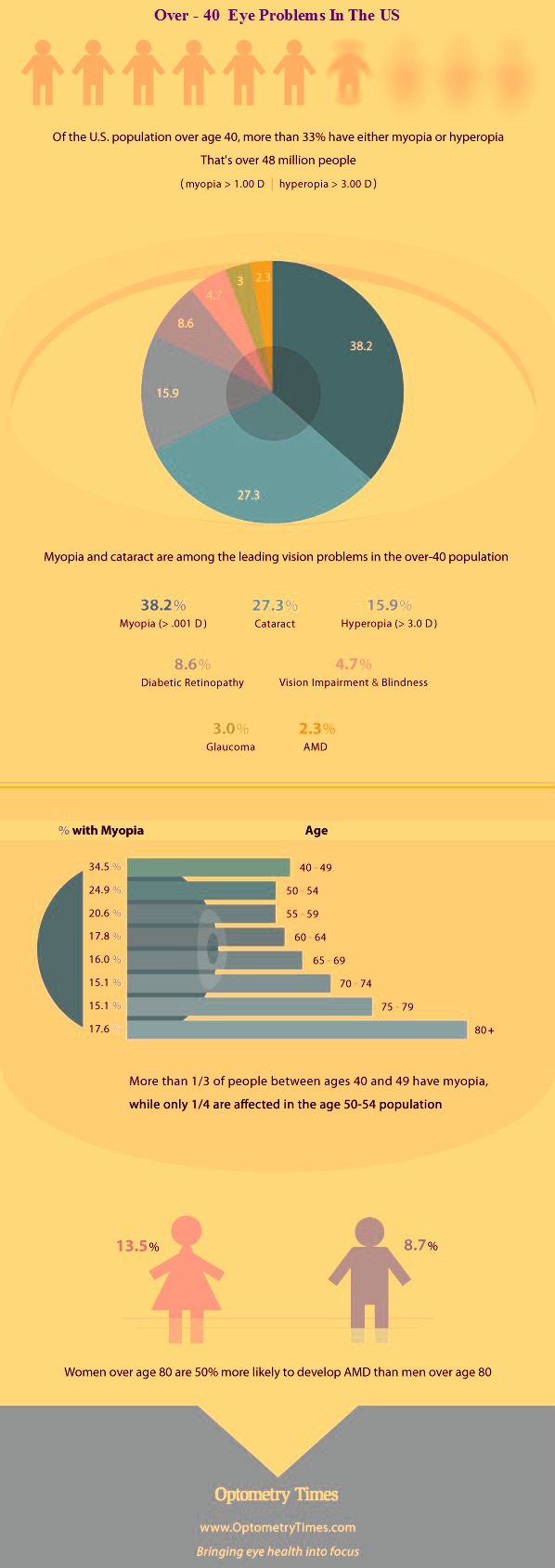
Here are some important eye health information takeaways from the above infographic:

  • 22 million people in the United States age 40 and older have cataracts
  • By age 80, more than half of all Americans have cataracts
  • Medical costs associated with cataracts are estimated to be $6.8 billion annually
  • 2.3 million Americans aged 40 and older have glaucoma (another 2 million don’t know they have the disease)
  • Glaucoma is the second leading cause of blindness with cataracts being first
  • 3.6 million people in the U.S. are visually impaired among people aged 40 and older
  • 1 million people in the U.S. are color blind
If it’s been more than a year since your last eye exam, please feel free to drop in to any 20/20 Eyeglass Superstore location or schedule an exam online. We have over 4000 thousand frames to choose from and we’re known for having a frame for every face and a price for any budget. We also have in-house optometrists that are available for full eye examinations. Check out our coupons page for current offerings as well.
20/20 Eyeglass Superstore is a family owned company that has been serving the Orange City, Melbourne and Winter Park areas for many years.  We look forward to becoming your number one source for all your eye care and eye fashion needs.  You can also follow us on Facebook or Twitter to stay up to date on eye trends and eye health.

Tuesday, 16 July 2013

How to Look Cool in Glasses

Glasses are awesome fashion accessories, but sometimes people will make fun of you for wearing them. Here's how to stay cool.

  1. Choose Eye Glasses. If your mom/dad has recommended something for you, don't be so fast to blow it off. Just because your parents like it, doesn't make it an instant "no". After all, they're the ones who can see them.

  2. Pick glasses that reflect your personality.
  3. Don't act any different because you have glasses. You're you, that's that.
  4. Learn to like your glasses. A typical stereotype is "Girl/Boy with glasses is a "geek". Ignore it. Glasses are so you can see clearly. They don't label you. Keep that in mind.
  5. Keep them in the best possible condition. Clean your glasses. Be careful not to drop them, don't get the frame or lenses scratched, and make sure you keep them clean. Wash them daily, water will work just fine if you're not so sure about cleaners.
  6. Get a nice case that works with your glasses.Pick one that YOU like.

    Are you looking for a great deal on eyeglasses in Orlando? You’ve come to the right place. Instead of waiting until the last minute, when you’re desperately looking for a great deal, we’re here to tell you how to find a great deal on your new pair of spectacles in Orlando.
    Make your decision and purchase your new eyeglasses at your favorite Orlando eyeglass vendor. We hope you’ll consider visiting 20/20 Eyeglass Superstore for all your vision needs.

    Read the original article on wikihow.com

Tuesday, 14 May 2013

What is Cataract?


A cataract is a clouding of the eye's natural lens, which lies behind the iris and the pupil.
Cataract is the most common cause of vision loss in people over 40 and is the principal cause of blindness in the world. In fact, there are more cases of cataracts worldwide than there are of glaucoma, macular degeneration and diabetic retinopathy.

Today, cataracts affect more than 22 million Americans age 40 and older. And as the U.S. population ages, more than 30 million Americans are expected to have cataracts by the year 2020, says Prevent Blindness America.

Cataract Symptoms and Signs

A cataract starts out small and at first has little effect on your vision. You may notice that your vision is blurred a little, like looking through a cloudy piece of glass or viewing an impressionist painting.
Hazy or blurred vision may mean you have a cataract.

A cataract may make light from the sun or a lamp seems too bright or glaring. Or you may notice when you drive at night that the oncoming headlights cause more glare than before. Colors may not appear as bright as they once did.

If you think you have a cataract, visit an eye doctor for an exam to any of our 20/20 eyeglass Superstore.

What Causes Cataracts?

Cataract risk factors include:
  • Ultraviolet radiation from sunlight and other sources
  • Diabetes
  • Hypertension
  • Obesity
  • Smoking
  • Prolonged use of corticosteroid medications
  • Statin medicines used to reduce cholesterol
  • Previous eye injury or inflammation
  • Previous eye surgery
  • Hormone replacement therapy
  • Significant alcohol consumption
  • High myopia
  • Family history

Cataract Prevention

High dietary intakes of vitamin E and the carotenoids lutein and zeaxanthin from food and supplements significantly decreased risks of cataract.

Good food sources of vitamin E include sunflower seeds, almonds and spinach. Good sources of lutein and zeaxanthin include spinach, kale and other green, leafy vegetables.

Antioxidant vitamins such as vitamin C and foods containing omega-3 fatty acids may reduce cataract risk.

Visit our Nutrition & Eyes section to read more about eye vitamins and how a healthful diet and good nutrition may help prevent cataracts.

Another step you can take to reduce your risk of cataracts is to wear protective sunglasses that block 100 percent of the sun's UV rays when you are outdoors.


Read the original article published on allaboutvision.com, written by Gretchyn Bailey.
20/20 Eyeglass Superstore is encouraging all American to do one thing that could save your loved ones sight: Get an eye health examination from a Doctor of Optometry and reduce the risk of cataract.

Call today to book an eye health examination for yourself and your loved ones! 

Monday, 13 May 2013

Eye Exam For Children


As a parent, you may wonder whether your preschooler has a vision problem or when you should schedule your child's first eye exam.
Eye exams for children are extremely important, because 5 to 10 percent of preschoolers and 25 percent of school-aged children have vision problems.* Early identification of a child's vision problem can be crucial because children often are more responsive to treatment when problems are diagnosed early.

For school-aged children, the American Optometric Association (AOA) recommends an eye exam every two years if no vision correction is required. Children who need eyeglasses or contact lenses should be examined annually or as recommended by their optometrist or ophthalmologist.

Early eye examinations are crucial to make surechildren have normal, healthy vision so they can perform better at schoolwork or play.

To read more about eye exam for children click here.

Early eye exams also are important because children need the following basic skills related to good eyesight for learning:

Signs of Vision Problems in Children

1. Gets headaches when reading or writing
2. Words slide together or get blurry when reading
3. Reads below grade level
4. Loses place while reading
5. Tilts head or closes an eye when reading
6. Hard to copy from the blackboard at school
7. Doesn’t like reading or writing
8. Leaves out small words when reading
9. Hard to write in a straight line
10. Burning, itching, or watery eyes
11. Hard to understand what he/she has read
12. Holds book very close
13. Hard to pay attention when reading
14. Hard to finish assignments on time
15. Gives up easily (says “I can’t” before trying)
16. Bumps into things, knocks things over
17. Homework takes too long
18. Daydreams in class
19. In trouble for being off task at school
20. Seem to have difficulty finding or picking up small objects dropped on the floor (after the age of 12 months)
21. Has difficulty focusing or making eye contact
22. Eyes appear to be crossed or turned
23. Closes one eye when trying to look at distant objects

It’s always a good idea to get your child’s eyes checked on an annual or bi-annual basis, but here are some signs you can look for that may indicate that your child is having vision problems.

If your child is experiencing vision problems, click here to schedule an appointment for an eye exam at through our convenient online scheduling feature or visit us at 20/20Eyeglass Superstore.