Showing posts with label eye. Show all posts

Tuesday, 3 December 2013

Tips for Eye Cosmetic Safety

Tips for Eye Cosmetic SafetyMascara and eye shadow may enhance your appearance, but eye cosmetics can easily harm your vision. Adopting these eye makeup safety tips will help keep your eyes pretty and healthy.

Mascara, eye shadow, and eyeliner can certainly do the trick. But if putting on eye cosmetics is part of your daily ritual, you should know about some potential dangers to your eyes. In fact, being just as diligent about removing eye makeup at night is more important than applying them each morning.
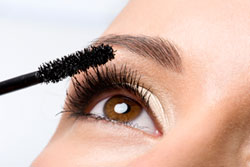
Eye cosmetics are generally safe materials — as long as you use them properly. Over time, all kinds of gunk can grow in those pretty little cosmetic packages. Bacteria and fungi can multiply, and if you continue to decorate your eyes with this makeup, you're transferring those germs directly to your eyes.

Dos and Don’ts of Using Eye Cosmetics

Here’s how you can make sure your eyes are pretty and healthy — these cosmetic safety tips will minimize your eyes' exposure to bacteria:
  • Don't hold onto old makeup — throw it away after a few months.
  • Don't use mascara that's dried out — and never attempt to moisten it with your saliva or water. It’s best to replace mascara every two to four months, or sooner if it’s dried.
  • Keep eye cosmetics cool — always at 85° F or below (that means don't keep them in your car or in a steamy bathroom).
  • Don't mix and match cosmetics. Use what's intended for your eyes on your eyes only — don't use the same pencil for both lips and eyes, as that can introduce bacteria.
  • Avoid kohl eyeliners — they may contain dangerous levels of lead. And avoid permanent coloring and dyes for eyelashes, as they can cause irreversible eye damage if not used correctly.
  • Never share your cosmetics with a friend.
Tips for Applying Eye Cosmetics Safely
It's also important to apply your eye makeup safely to help prevent injury. Getting anything that close to your eye can potentially cause damage — so when you're painstakingly drawing that perfect line, take care not to get the cosmetics in your eye.
  • Never put your eye cosmetics on while you're driving or riding in a car. Y
  • Skip eye cosmetics when you've got an irritated or infected ey
  • Keep eye cosmetics outside of your eye
  • Always wash your hands before you dig into your makeup bag and start applying eye cosmetics.
  • Avoid eye cosmetics that are iridescent, glittery, or shiny
  • Make sure that all eye cosmetic applicators are clean before you use them
reaf the original article on Everydayhealth.com

If you’re experiencing changes in your vision or visible changes to your eyes, these can be early warning signs of serious eye conditions.  No matter how busy you are, you must put aside some time for yourself to get your eyes looked at by a certified optometrist.
Click here to schedule an eye exam

Monday, 13 May 2013

Eye Exam For Children


As a parent, you may wonder whether your preschooler has a vision problem or when you should schedule your child's first eye exam.
Eye exams for children are extremely important, because 5 to 10 percent of preschoolers and 25 percent of school-aged children have vision problems.* Early identification of a child's vision problem can be crucial because children often are more responsive to treatment when problems are diagnosed early.

For school-aged children, the American Optometric Association (AOA) recommends an eye exam every two years if no vision correction is required. Children who need eyeglasses or contact lenses should be examined annually or as recommended by their optometrist or ophthalmologist.

Early eye examinations are crucial to make surechildren have normal, healthy vision so they can perform better at schoolwork or play.

To read more about eye exam for children click here.

Early eye exams also are important because children need the following basic skills related to good eyesight for learning:

Signs of Vision Problems in Children

1. Gets headaches when reading or writing
2. Words slide together or get blurry when reading
3. Reads below grade level
4. Loses place while reading
5. Tilts head or closes an eye when reading
6. Hard to copy from the blackboard at school
7. Doesn’t like reading or writing
8. Leaves out small words when reading
9. Hard to write in a straight line
10. Burning, itching, or watery eyes
11. Hard to understand what he/she has read
12. Holds book very close
13. Hard to pay attention when reading
14. Hard to finish assignments on time
15. Gives up easily (says “I can’t” before trying)
16. Bumps into things, knocks things over
17. Homework takes too long
18. Daydreams in class
19. In trouble for being off task at school
20. Seem to have difficulty finding or picking up small objects dropped on the floor (after the age of 12 months)
21. Has difficulty focusing or making eye contact
22. Eyes appear to be crossed or turned
23. Closes one eye when trying to look at distant objects

It’s always a good idea to get your child’s eyes checked on an annual or bi-annual basis, but here are some signs you can look for that may indicate that your child is having vision problems.

If your child is experiencing vision problems, click here to schedule an appointment for an eye exam at through our convenient online scheduling feature or visit us at 20/20Eyeglass Superstore.

Friday, 3 May 2013

Tips for Making Halloween Safe

Halloween should be a fun time that your child remembers for years to come. Every year, there are several hundred eye injuries related to costumes and masks treated in U.S. hospital emergency rooms. There are many things you can do to ensure your child enjoys a safe Halloween and prevent a night of treats from turning into a night of tragedy.

Costumes and Safety

  • Avoid costumes with masks, wigs, floppy hats or eye patches that block vision.
  • Tie hats and scarves securely so they don’t slip over children’s eyes.
  • Avoid costumes that drag on the ground to prevent tripping or falling.
  • Avoid pointed props such as spears, swords or wands that may harm other children’s eyes.
  • Wear bright, reflective clothing or decorate costumes and bags with reflective tape/patches.
  • Carry a bright flashlight to improve visibility.
  • Do not ride a bike/scooter/skateboard or roller blade while wearing a costume.
  • Obey all traffic signals—pedestrian and driver.
  • Younger children should go with an adult while trick-or-treating around the neighborhood. Older children should trick-or-treat in groups.
  • Use common sense. Never dart out between parked cars or hidden corners such as alleys. Avoid streets under construction.
  • Don’t trick or-treat in busy commercial areas or where there is heavy traffic.
  • Go trick-or-treating in daylight, as it is safer than going after dark.
  • A safer option is to go to a Halloween party instead of trick-or-treating.

Cosmetics and Contacts Lenses

  • Wear hypoallergenic makeup. Have an adult apply the makeup and remove it with cold cream instead of soap. Use makeup in place of masks.
  • Cosmetic contacts that make your eyes look like cat’s eyes may seem like fun, especially at Halloween. However, these lenses come with the same risks as regular contact lenses. This growing fad may seem harmless, but it is not!
  • Improper use of cosmetic lenses can lead to serious eye complications. These problems include bacterial infections, swelling, eye pain, sensitivity to light, conjunctivitis (pink eye), corneal scratches, corneal ulceration and even permanent loss of sight.
  • Never buy cosmetic contacts without a prescription! Never share your cosmetic contacts with others or use someone else’s contacts.
  • Since this fad is popular among teens, be vigilant about older kids’ appearance before letting them leave the house. If they are wearing these contacts, ask where they got them.

Treats

  • Inspect all trick-or-treat items for signs of tampering before allowing children to eat them.
  • Carefully inspect any toys or novelty items received by kids age 3 and younger. These may pose a choking hazard. Avoid giving young kids lollipops as the sticks can cause eye injuries.

Decorations

  • Be sure your lawn, steps, porch and front door are well lit and free from obstacles.
  • Keep candles and jack-o’-lanterns away from steps and porches outside, as costumes could brush against them and ignite. Inside, keep them away from curtains and other decorations to avoid causing a fire.
Read the original article published on preventblindness.org

Decorative contact lenses can be a fun part of your halloween costume this year, but before you go out and buy a pair you should understand the danger and safety precautions you should take to avoid vision problems and blindness.

To know more about Halloween, including details on who should NOT use decorative contact lenses. Drop in any of our 20/20 Eyeglass Superstore. We will look forward seeing you!


Monday, 22 April 2013

Risk Factors for Cataract

Risk for Cataract Increases with Age, but Other Factors Also Contribute.

With age come new health challenges, especially for vision. Today, more than 22 million Americans age 40 and older have cataract, a clouding of the eye’s lens which blocks or changes the passage of light into the eye.  According to the National Eye Institute, by age 80, more than half of all Americans will either have a cataract or have had cataract surgery.

The risk of developing a cataract increases with age. Other possible risk factors include:
  • Intense heat or long-term exposure to UV rays from the sun
  • Certain diseases, such as diabetes
  • Obesity
  • High blood pressure
  • Inflammation in the eye
  • Hereditary influences
  • Long-term steroid use
  • Eye injuries
  • Other eye diseases
  • Smoking
Early symptoms of cataract may include cloudy or blurry vision.  Lights may cause a glare, seem too dim or seem too bright.  Patients may also find it difficult to read or drive, especially at night, or may have to change his or her eyeglass prescription often.

Unfortunately, there are no medications or other treatment options besides surgery to correct cataract.  However, in the United States, cataract surgery has a 95 percent success rate, generally resulting with patient’s vision of 20/20 to 20/40.  And, it is the most frequently performed surgery, often performed as an outpatient procedure.

“By getting a complete, dilated eye exam, your doctor can discuss with you the best strategy to protect your vision well into the future,” said Hugh R. Parry, president and CEO of Prevent Blindness America. “We encourage everyone, especially those ages 40 and older, to make their vision a priority by scheduling an eye appointment today.”

Read the original article on preventblindness.com

 For more information on cataract contact us at any of our 20/20 Eyeglass Superstore.  We look forward to seeing you soon!

 Melbourne
20/20 Eyeglass Superstore
785 N. Wickham Rd. Suite
106 Melbourne, FL 32935
321-259-3935

Orange City
20/20 Eyeglass Superstore
 1270 Saxon Blvd,
Orange City, FL. 32763
386-774-5000

Winter Park/Orlando
20/20 Eyeglass Superstore Inc
1555 Semoran Blvd.
Winter Park , FL , 32792
407 767 5600