Showing posts with label contact lenses2020 Eyeglass Winter Park. Show all posts

Thursday, 19 December 2013

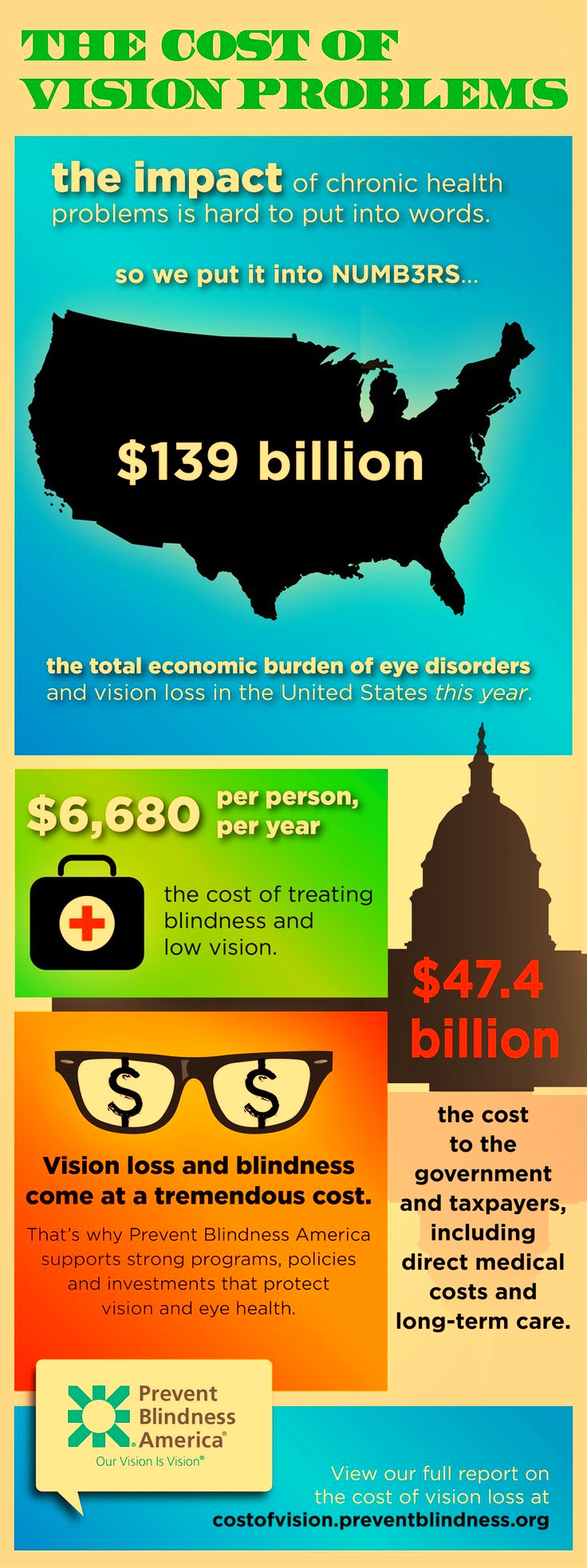
Cost Of Vision Problem In United States

Cost Of Vision Problem In United States
Here is some important eye health information takeaway from the SugarlandEyes infographic:
  • 22 million people in the United States age 40 and older have cataracts
  • By age 80, more than half of all Americans have cataracts
  • Medical costs associated with cataracts are estimated to be $6.8 billion annually
  • 2.3 million Americans aged 40 and older have glaucoma (another 2 million don’t know they have the disease)
  • Glaucoma is the second leading cause of blindness with cataracts being first
  • 3.6 million people in the U.S. are visually impaired among people aged 40 and older
  • 1 million people in the U.S. are color blind
If it’s been more than a year since your last eye exam, please feel free to drop in to any 20/20 Eyeglass Superstore location or schedule an exam online. We have over 4000 thousand frames to choose from and we’re known for having a frame for every face and a price for any budget. We also have in-house optometrists that are available for full eye examinations. Check out our coupons page for current offerings as well.

20/20 Eyeglass Superstore is a family owned company that has been serving the Orange City, Melbourne and Winter Park areas for many years.  We look forward to becoming your number one source for all your eye care and eye fashion needs.  You can also follow us on Facebook or Twitter to stay up to date on eye trends and eye health.

Friday, 1 November 2013

UV light radiation can damage our eyes

UV light radiation can damage our eyesWe all know the value of guarding against sunburn and skin cancer by slathering on sunscreen, and most of us wear sunglasses in summer to shield our eyes from glare. When it comes to preserving eyesight over the long term, however, many of us have misconceptions about the sun’s dangers. Do you know the facts behind these myths?
  • Myth #1: Sunglasses are not necessary in winter.
    Fact: The damaging effects of UV rays are present during winter as well as summer. Sunglasses with UV protection are necessary whenever you spend time outdoors during daylight hours, all year round.
  • Myth #2: On overcast days, UV rays are not harmful.
    Fact: Just because the sun is not glaring brightly does not mean its UV rays are not affecting the eyes. If there’s daylight, UV rays are present. They penetrate through haze and clouds, and reflect off water, white sand, pavement and snow.
  • Myth #3: Our eyesight deteriorates with age simply because we get older.
    Fact: This is true to some extent, but the fact is that a lifetime of exposure to UV light increases the likelihood of developing macular degeneration, cataracts and other eye conditions. T
  • Myth #4: Adults’ eyes are at a higher risk of sun damage than children’s.
    Fact: Just the opposite is true. Children’s eyes are especially vulnerable to sun damage because they are still developing. Their pupils are larger, allowing in more light, and the lenses of their eyes are more transparent. They also spend more time outdoors than most adults. Brief but intense UV contact may cause corneal sunburn, the most immediate danger to children’s eyes from sun overexposure.
  • Myth #5: Only the sun emits ultraviolet light.
    Fact: Artificial light sources, such as tanning beds and welding machines, also produce UV radiation and require eye protection during use.
Remember: Shades, Hat, Veggies
Here are the best ways to protect your eyes:
  • When spending time outdoors, wear protective eyewear, such as polarized sunglasses, that blocks 99 to 100 percent of UV-A and UV-B rays.
  • Wear a wide-brimmed hat or cap, which will block about half of UV rays.
Children’s eyes are especially vulnerable to sun damage because they are still developing.
  • Remember that UV rays reflect off bright surfaces such as water, snow, white sand and pavement, making it critical—especially for children—to wear sunglasses and hats in the snow or at the beach, swimming pool or playground.
  • Always wear protective goggles when using a tanning bed or welding machine.
  • Eat a healthy diet. There is scientific evidence that a diet rich in brightly colored fruits and vegetables helps reduce the risk of sun damage to your eyes.
Many bright summer days are ahead. Enjoy outdoor activities safely by protecting your eyes—and those of your children—from the sun!

To read the original article click here

Our eye care tips will help you prepare your eyes for the warmer season. Keep your eye drops in the fridge, preparing for allergies, and visiting your optometrist for an eye examination.
If you’re on the market for new sunglasses, eyeglasses or contact lenses this Spring, check out our deals page for discounts and sales.

Thursday, 22 August 2013

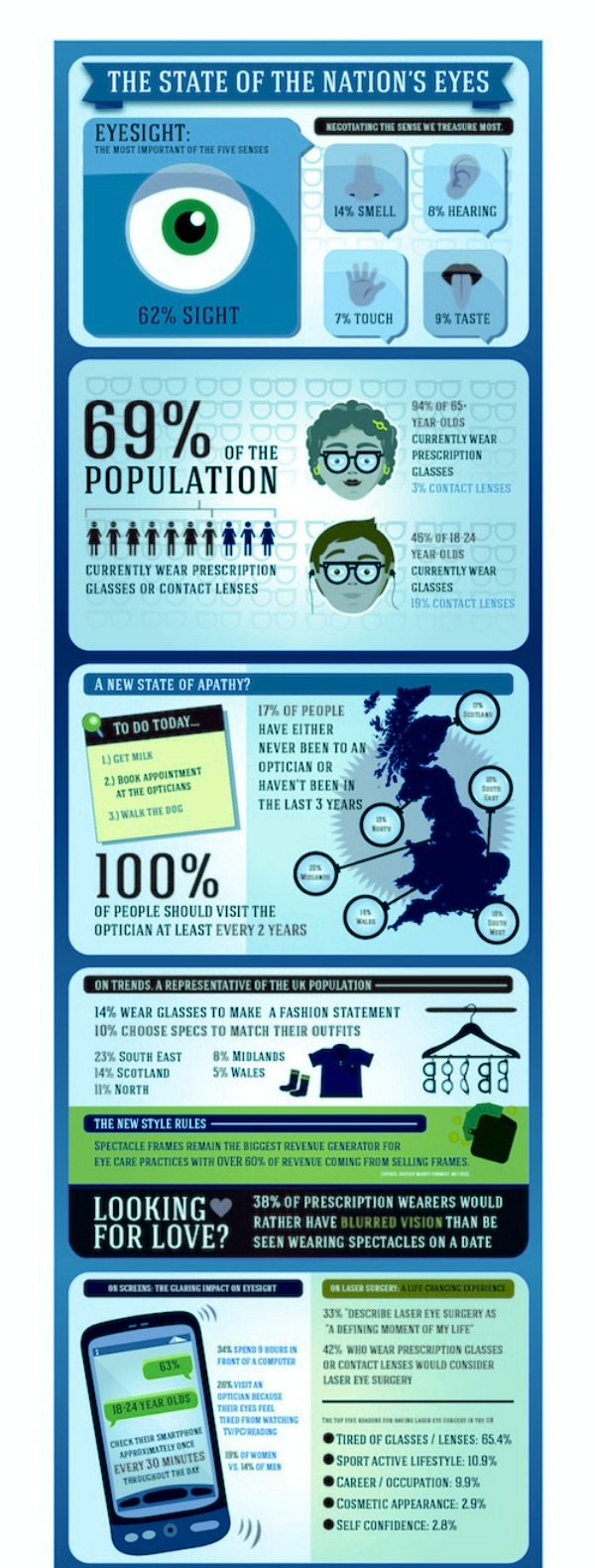
Eyesight The Most Important Of The Five Senses

The human eye is an amazing organ that most of us rely on every waking moment of the day.  From morning till night, our vision allows us to see beautiful Florida sunsets, our beloved family and much more.  Here at 20/20 Eyeglass Superstore, our main goal is to keep you up-to-date on everything related to eye care and eye health.

Eye The Most Important Sense
20/20 Eyeglass Superstore of Melbourne, FL is always glad to share helpful information like these interesting eye facts with you! We’d love to help you in any way we can, so come on by and see us at one of our 20/20 Eyeglass Superstore locations in central Florida.

Thursday, 30 May 2013

How to Choose Contact Lenses


Have you recently found out from your Optometrist that you need to be fitted for corrective lenses?

Contact lenses can be really simple to wear, but they can also be a hassle if you don't choose the right ones for you. It's very simple to choose the perfect contact lenses, so don't let that stop you from getting contacts.

1.     Go to the eye doctor. The eye doctor knows best, so you should definitely stop by your optometrist so they can make some recommendations for you.

2.     Choose hard or soft lenses. There hard two main types of contact lenses: hard lenses and soft lenses. Nowadays, most people wear soft lenses, although there are pros and cons to both:
·        Soft Lenses: More comfortable to insert and to wear, but absorb pollutants (soap on your fingers, etc.) more easily, which can irritate some eyes. They are also less durable and can rip/tear easily.
·        Hard Lenses: Hard lenses are the best solution for certain problems (ask your optometrist about whether that applies to you), and they are more durable. However, they are less comfortable than soft lenses.

3.     Figure out how long you want your contacts to last. Depending on what you need your contacts for, and your personal preference, choose how long you want your contacts to last before you dispose of them. There are many varieties: annuals (disposed once a year), monthlies (disposed once a month), bi-weeklies (disposed once every 2 weeks), weeklies (disposed every week), and dailies (disposed after every day).

4.     Try them out. Ask your optometrist if you can test a couple different brands or lengths of time (dailies, weeklies, etc.) to see which ones you like. Wear the samples and figure out which ones are easier to insert and take out, which ones are the most comfortable, which ones don't irritate your eye, etc. Doing so will help you make a more informed decision.

Read the original article on wikihow.com.

If you’re on the fence regarding contact lenses or eyeglasses, it’s important to consider your lifestyle. If you love to play sports, contact lenses might be a good choice. Another option is buying both – contact lenses and eyeglasses. This way you can have the best of both worlds!

Visit 20/20 Eyeglass Superstore today and check out our great discounts on both contact lenses and eyeglasses. We look forward to seeing you!